
Under Policy 0070 from the European Medicines Agency (EMA), sponsors are required to submit anonymized clinical reports for publication on the Clinical Data Publication (CDP) portal. Once published, these reports become accessible to external researchers, reinforcing the EMA's commitment to transparency in clinical research. The principles discussed here become even more critical as the scope and volume of submissions expand under the Step 2 relaunch.
Before public disclosure, all personal data and Commercially Confidential Information (CCI) must be carefully anonymized. Two categories of information require explicit protection:
- Protected Personal Data (PPD), which could directly or indirectly identify trial participants or personnel and must be anonymized.
- Commercially Confidential Information (CCI), which refers to non‑public information whose disclosure could specifically undermine a sponsor’s legitimate economic or competitive interests.
Importantly, EMA does not accept CCI by default — each proposed CCI redaction must be narrowly applied and clearly justified. For many sponsors, Policy 0070 submissions span thousands of pages, creating operational, technical, and strategic challenges within a compressed regulatory timeline.
In a recent webinar, we explored how sponsors can prepare effectively, minimize last-minute stress, and ensure high-quality submissions that meet EMA expectations.
Understanding the Timeline: Why Timing Is Everything
For initial marketing authorization applications, the anonymization process begins with an invitation letter from the EMA on Day 121 of the procedure. Sponsors are then required to submit their anonymization proposal package between Day 181 and up to 30 days after the opinion from the Committee for Medicinal Products for Human Use (CHMP). These procedural milestones appear clearly defined, the most critical anonymization and CCI decisions must be made earlier — well before formal submission deadlines.
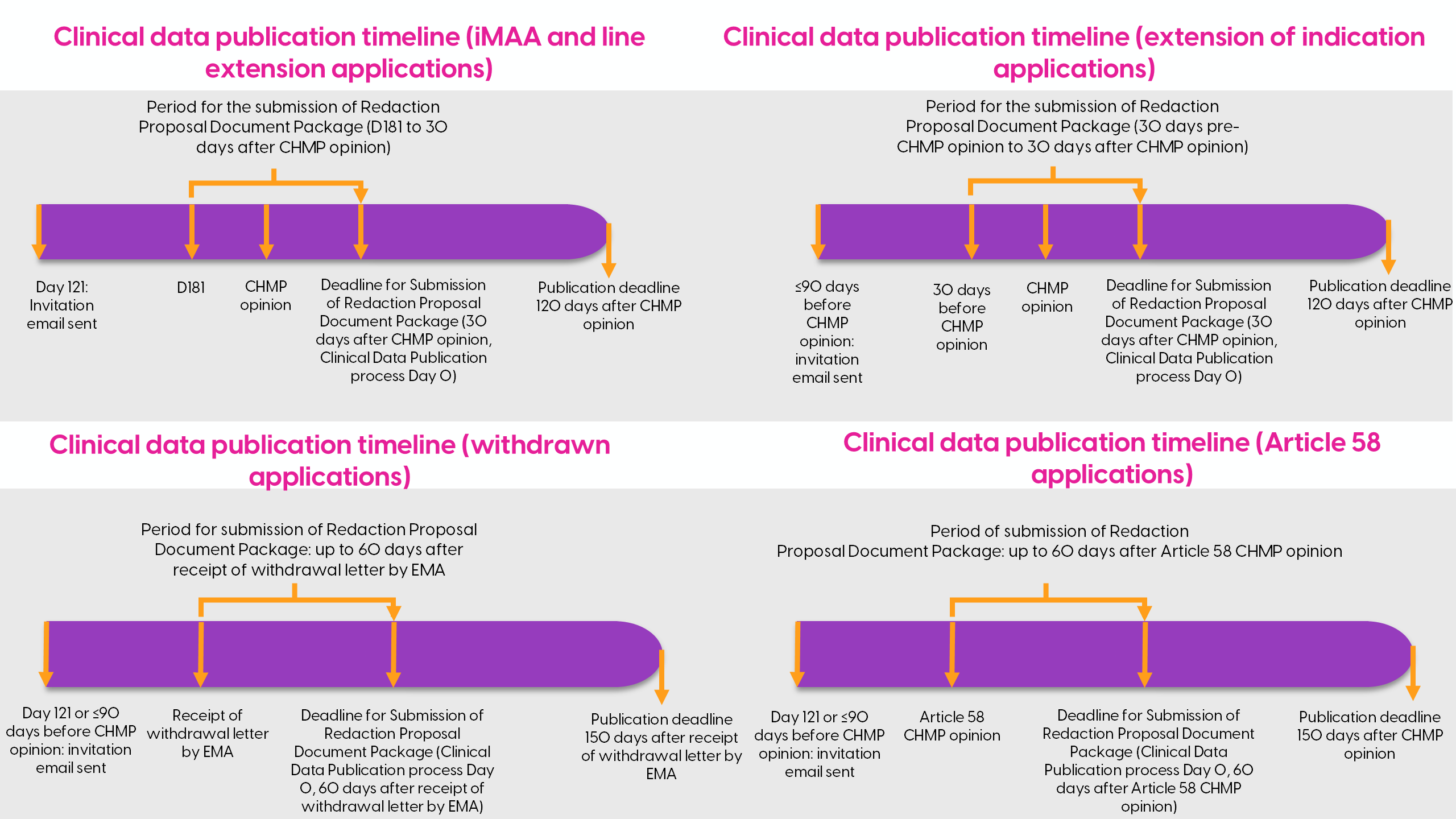
Although this may seem like a structured window, the reality is that the workload is substantial:
- Thousands of pages of clinical documentation
- Complex CCI assessments
- Detailed anonymization methodologies
- Iterative review cycles
Without early preparation, these timelines can quickly become overwhelming.
Why Early Preparation Makes the Difference
Success under Policy 0070 begins long before Day 121. Sponsors who wait for the EMA invitation to start planning often face re source bottlenecks, vendor coordination delays, tool selection challenges, and increased compliance risk.
Delayed preparation does not simply extend timelines, it heightens the risk of EMA queries, rework, and publication delays. Instead, proactive preparation allows teams to move confidently once the clock begins. Sponsors should consider the below steps when preparing early:
Estimate Submission Volume Early
Understanding the anticipated size and scope of your clinical documentation is foundational. Early volume estimation enables:
- Realistic resourcing
- Budget forecasting
- Timeline accuracy
- Identification of high-risk documents
Typical documents in scope often include clinical study reports (CSRs), CSR appendices, such as protocols and SAPs, patient narratives, and clinical summaries and overviews — together frequently totaling thousands of pages. Volume drives everything, from tool selection to anonymization strategy.
Develop a Tentative Project Timeline
A draft timeline built well in advance helps sponsors:
- Map key regulatory milestones
- Align internal review cycles
- Coordinate vendors
- Anticipate bottlenecks
Even a provisional plan significantly reduces uncertainty when the formal invitation arrives and helps teams avoid compressing complex decisions into an already constrained window.
Initiate Project Management Activities Early
Operational readiness is just as important as regulatory understanding. Early project management steps should include:
- Resource planning (internal and external)
- Vendor identification and onboarding
- Tracker setup for document control
- Selection of anonymization tools and workflows
Sponsors who treat Policy 0070 as a structured project — rather than an ad hoc regulatory task — consistently experience fewer rework cycles and smoother EMA interactions.
Choose the Right Anonymization Approach
One of the most critical strategic decisions is selecting an anonymization methodology:
- Qualitative approach: Risk-based justification and contextual redaction
- Quantitative approach: Statistical risk modeling and formal privacy thresholds
Each approach has implications for timelines, documentation, and justification requirements. Selecting the right methodology early prevents costly pivots mid-process. EMA generally prefers quantitative anonymization where feasible. When a qualitative approach is used, sponsors are expected to justify the rationale and document limitations as a deviation in the Anonymization Report. In practice, many sponsors adopt a hybrid approach, combining qualitative risk-based reasoning with quantitative validation, to balance privacy protection and data utility, particularly for complex or heterogeneous datasets.
Managing Large Volumes Without Sacrificing Quality
Given the scale of Policy 0070 submission packages, teams should plan for substantial document volumes during anonymization and quality control.
The best practices for handling large datasets efficiently:
- Standardized anonymization rules and consistency checks
- Clear CCI assessment frameworks
- Structured quality control processes
- Defined communication pathways between regulatory, legal, and clinical teams
High volume does not have to mean high risk, provided systems are in place.
Avoiding Last-Minute Stress
One of the most common challenges sponsors face is compressing complex anonymization work into a narrow window after Day 121.
By understanding the requirements in advance and establishing a readiness framework, teams can:
- Maintain submission quality
- Reduce compliance risk
- Prevent resource burnout
- Ensure smoother regulatory interactions
Preparation transforms Policy 0070 submission from a reactive scramble into a controlled, predictable process.
Preparation as the Key to Policy 0070 Success
EMA Policy 0070 represents a significant commitment to transparency in clinical research. Although the requirements are demanding, they are entirely manageable with the right strategy.
Sponsors who begin planning early — estimating volumes, building timelines, aligning resources, and selecting methodologies — position themselves not just to comply, but to execute with confidence.
In a regulatory environment where timelines are fixed and expectations are high; preparation is not optional. It is strategic advantage.
Blog Authors

TAGS: European Medicines Agency (EMA) Functional Service Provider (FSP) Clinical Data